RESOURCES > BLOGS

The Smart Campus Isn’t About More Technology. It’s About Better Connections.

August 5, 2026 | blogs

The Smart Campus Isn't About More Technology. It's About Better Connections.

Walk through any university today and you'll notice something interesting. Students aren't just carrying notebooks anymore. They're carrying multiple devices. A laptop for class. A tablet for reading. A smartphone that somehow becomes a scanner, calculator, calendar, and communication tool all at once.

Learning has changed. The way campuses communicate hasn't always kept up.

Imagine this. It's Monday morning. A professor is running a few minutes late because of heavy traffic. Instead of dozens of students waiting outside a classroom with no idea what's happening, a quick announcement reaches everyone instantly. Across campus, the IT team is monitoring the network, ensuring thousands of students stay connected without interruptions. Meanwhile, the administration is coordinating with security personnel, facilities management, and department heads through one seamless communication platform.

It sounds simple, but behind every smooth campus experience is something many people never notice, a reliable communications and network infrastructure.

For years, digital transformation in education has focused on smart classrooms, online learning platforms, and AI-powered tools. While these innovations have transformed teaching, they often rely on an overlooked foundation. Without dependable connectivity and secure communications, even the smartest applications struggle to deliver the experience students and educators expect.

A Smart Campus isn't defined by having the latest gadgets. It's defined by how effortlessly people connect, collaborate, and communicate.

This is where institutions begin asking different questions. Instead of, "Do we need better Wi-Fi?" they start asking, "How do we create an environment where technology simply works?" Instead of managing separate systems for voice, networking, and campus operations, they look for a unified approach that simplifies everything behind the scenes.

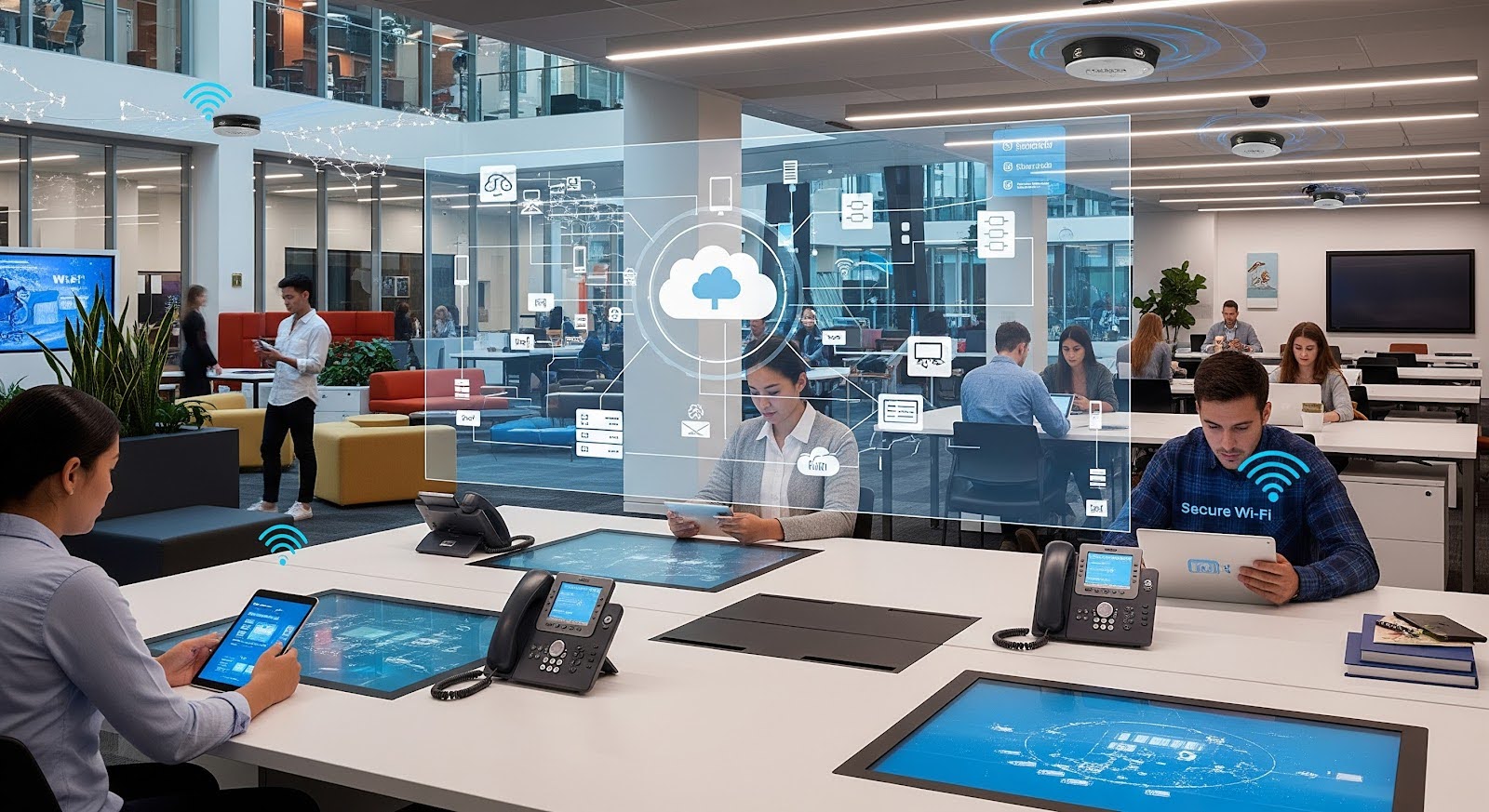
That's where Alcatel-Lucent Enterprise comes in.

Rather than adding another layer of technology, Alcatel-Lucent Enterprise helps build the digital backbone of a modern campus. Its secure networking solutions keep classrooms, libraries, laboratories, and administrative offices connected with reliable wired and wireless infrastructure. Its unified communications platform allows faculty, administrators, and support teams to collaborate more efficiently, whether they're in the same building or working remotely.

The result isn't just faster internet or better phone systems. It's a campus where students spend less time dealing with technical frustrations and more time learning. Faculty can focus on teaching instead of troubleshooting connectivity issues. IT teams gain greater visibility into their network, allowing them to resolve issues before they disrupt the learning experience.

As universities continue embracing hybrid learning, digital enrollment, smart facilities, and connected campuses, the importance of resilient infrastructure becomes even more apparent. Every virtual lecture, online examination, digital library, and campus-wide announcement depends on a network that is secure, scalable, and ready for the future.

Technology should never become another obstacle in education. It should quietly enable every conversation, every lesson, and every opportunity to learn.

Building a Smart Campus isn't about installing more devices. It's about creating an environment where students feel connected, educators feel supported, and administrators have confidence that the technology behind the scenes is working as hard as they are.

At One Depot, we believe every great learning experience begins with a strong digital foundation. Together with Alcatel-Lucent Enterprise, we're helping educational institutions modernize their communications and networking infrastructure so they can focus on what matters most, empowering the next generation of learners.

Because the smartest campus isn't the one with the most technology. It's the one where every connection creates an opportunity to learn, collaborate, and succeed.

Source: