RESOURCES > BLOGS

Zero Trust Security: Why Passwords Alone Are No Longer Enough

July 30, 2026 | blogs

For years, cybersecurity was built around a simple assumption: if someone successfully logged in to the corporate network, they could be trusted. Firewalls guarded the perimeter, passwords unlocked applications, and once inside, employees could move freely across systems. It was a model that worked when everyone sat in the same office and business applications lived inside a company data center.

That world no longer exists.

Today, employees work from home, from client sites, and from airports. Critical business applications are hosted across multiple cloud platforms, while partners, contractors, and third-party vendors regularly require access to internal resources. The traditional network perimeter has dissolved, and cybercriminals have adapted faster than many organizations.

The reality is that attackers no longer spend most of their time trying to break through firewalls. Instead, they steal identities.

A compromised password can give an attacker the same level of access as a legitimate employee. If that identity is trusted without question, the attacker can quietly move across systems, access sensitive information, and remain undetected for weeks or even months.

This shift is one of the biggest reasons organizations around the world, including many in the Philippines, are adopting a Zero Trust security strategy.
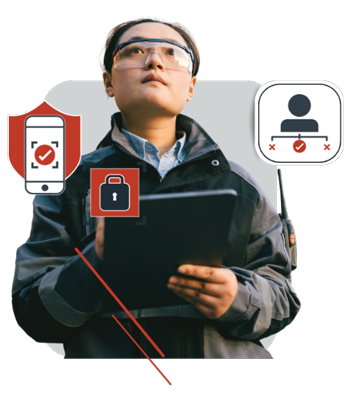

Zero Trust is not about trusting no one forever. It is about refusing to assume trust. Every user, every device, and every access request must be verified before access is granted, regardless of whether the request comes from inside or outside the corporate network.

At the heart of this strategy is identity.

RSA describes identity as the new security perimeter because, in today's digital workplace, identity is the most reliable way to establish trust. Rather than relying solely on where a user is connecting from, organizations must first answer a more important question: Who is requesting access, and should they have it right now?

Imagine an employee logging in from their usual office every weekday. Their behavior is predictable, and access is granted with minimal friction. Now imagine the same credentials suddenly being used from another country at an unusual hour, attempting to access financial records that the employee has never viewed before. Although the username and password are correct, the context tells a very different story.

This is where modern identity security becomes essential.

Instead of treating authentication as a one-time event, Zero Trust continuously evaluates every access request. Multi-factor authentication strengthens identity verification beyond passwords, while contextual signals, such as device health, location, time of access, and user behavior, help determine whether the request should be approved, challenged, or blocked. Trust becomes dynamic rather than permanent.

Another important principle is least privilege. Employees should only have access to the systems and data necessary to perform their roles. If an account is compromised, limiting permissions significantly reduces the attacker's ability to move laterally across the organization or access sensitive assets.

This approach also changes how organizations think about remote access.

For many years, Virtual Private Networks (VPNs) were the standard solution for connecting remote employees. Once authenticated, users were often placed inside the corporate network with broad connectivity. While VPNs encrypted traffic, they frequently extended network-level trust beyond what was necessary.

Zero Trust Network Access (ZTNA) takes a different approach. Instead of granting access to an entire network, users are connected only to the specific applications they are authorized to use. Every request is evaluated based on identity, device posture, and risk, reducing the opportunities for attackers to move within the environment if credentials are compromised.


RSA has consistently emphasized that successful Zero Trust implementations begin with identity rather than infrastructure. Its Zero Trust framework combines strong multi-factor authentication, identity governance, lifecycle management, and risk-based authentication to verify users continuously before granting or maintaining access. This identity-first approach helps organizations strike a balance between protecting critical resources and enabling employees to work securely from anywhere.

For Philippine organizations embracing digital transformation, hybrid work, and cloud adoption, the question is no longer whether someone knows the correct password. The more important question is whether every access request can be trusted in its current context.

Passwords remain part of the authentication process, but they are no longer enough to protect modern businesses from today's evolving threats.

Zero Trust shifts the conversation from trusting networks to verifying identities. By making identity the foundation of security, organizations can reduce the risk of credential theft, strengthen compliance, and build a more resilient security posture for the future.