
Personalized omnichannel engagement is no longer optional in financial services, it’s the standard. Today’s customers expect relevant, timely communication that reflects their needs and behaviors. Generic messages are easily ignored, while experiences that feel thoughtful and connected earn attention and trust.
As the financial landscape continues to evolve, expectations rise alongside it. Customers want their bank or insurer to understand their journey and meet them on the channels they already use, at moments that truly matter.
Customers no longer want financial institutions to simply promote products. They expect guidance that fits their life stage, goals, and priorities. A young professional starting to save has different needs from someone preparing for retirement, and communication should reflect that difference.
When messages feel personal, engagement improves. More importantly, trust deepens. Financial institutions can tailor communication using transaction data, behavioral insights, and life events, the real challenge is turning that data into experiences that feel genuinely helpful.
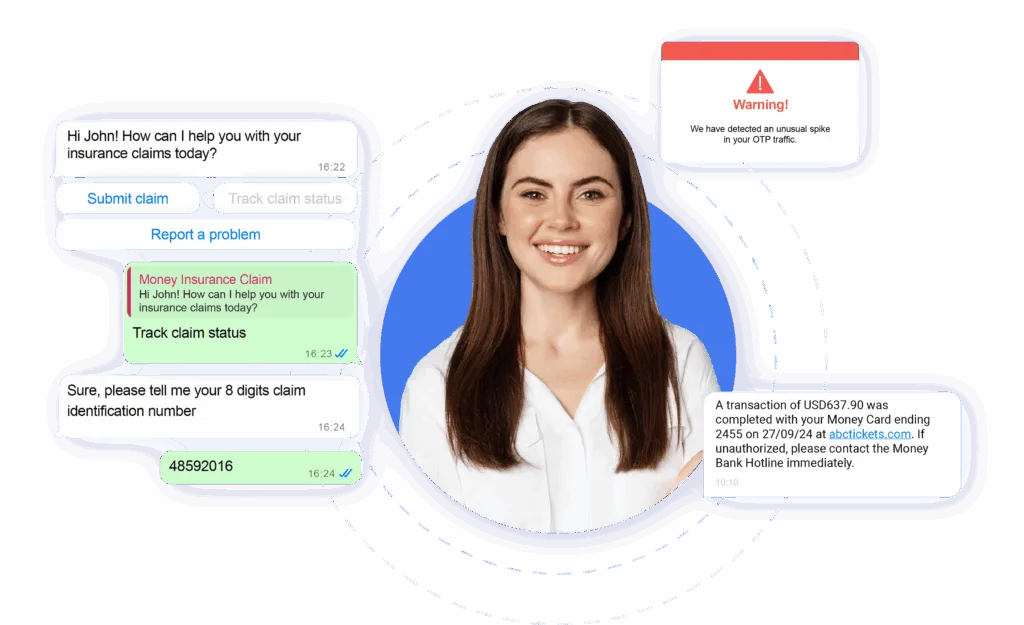
Personalized omnichannel engagement brings together channels like SMS, email, WhatsApp, mobile apps, and websites into one cohesive experience. Instead of isolated messages, customers receive communication that flows naturally from one channel to another.
A customer might receive an alert, continue the conversation through messaging, and complete an action within an app, all without repeating steps or losing context. When systems work together, every interaction feels seamless and intentional.
Messaging has become a preferred channel for financial communication because it’s fast, direct, and convenient. Different channels serve different purposes, SMS for alerts, messaging apps for reminders and follow-ups, and in-app chat for real-time assistance.
Customers increasingly favor two-way communication that allows them to respond, ask questions, and take action instantly. Financial institutions that meet this expectation gain stronger engagement and long-term loyalty.
Effective omnichannel engagement is powered by tools that connect customer data with automated communication. Real-time triggers enable messages to be sent based on transactions, milestones, or account activity, ensuring relevance without manual effort.
Whether it’s a spending notification, savings milestone, or personalized recommendation, the right message reaches the right customer on the right channel at the right time.
Data alone doesn’t create engagement, how it’s used makes the difference. By grouping customers based on goals and behavior, financial institutions can deliver communication that feels timely, supportive, and personal.
Instead of generic offers, customers receive insights and recommendations that align with their financial progress, reinforcing the feeling that their provider truly understands them.
Omnichannel engagement isn’t about being everywhere. It’s about ensuring every touchpoint works together. Channel orchestration aligns timing, tone, and context across all platforms, creating a consistent experience from start to finish.
When communication feels connected, customers move effortlessly between channels and interactions feel more human, building confidence at every step.
Personalized omnichannel engagement goes beyond improving campaigns. It builds lasting relationships in an industry where trust is everything. When every interaction feels relevant, secure, and consistent, loyalty follows.
Financial institutions that deliver connected, real-time experiences stand out, not because they communicate more, but because they communicate better.
December 2, 2025 | Blogs
READ MOREJanuary 14, 2026 | Blogs
READ MOREJanuary 8, 2026 | Blogs
READ MORE